Home / News / “We are independent because our...
“We are independent because our decision-making and ownership are Italian.” - Valeria Sandei in the Business & Finance section of La Repubblica
“We are independent because our decision-making and ownership are Italian.” - Valeria Sandei in the Business & Finance section of La Repubblica
08-06-2026
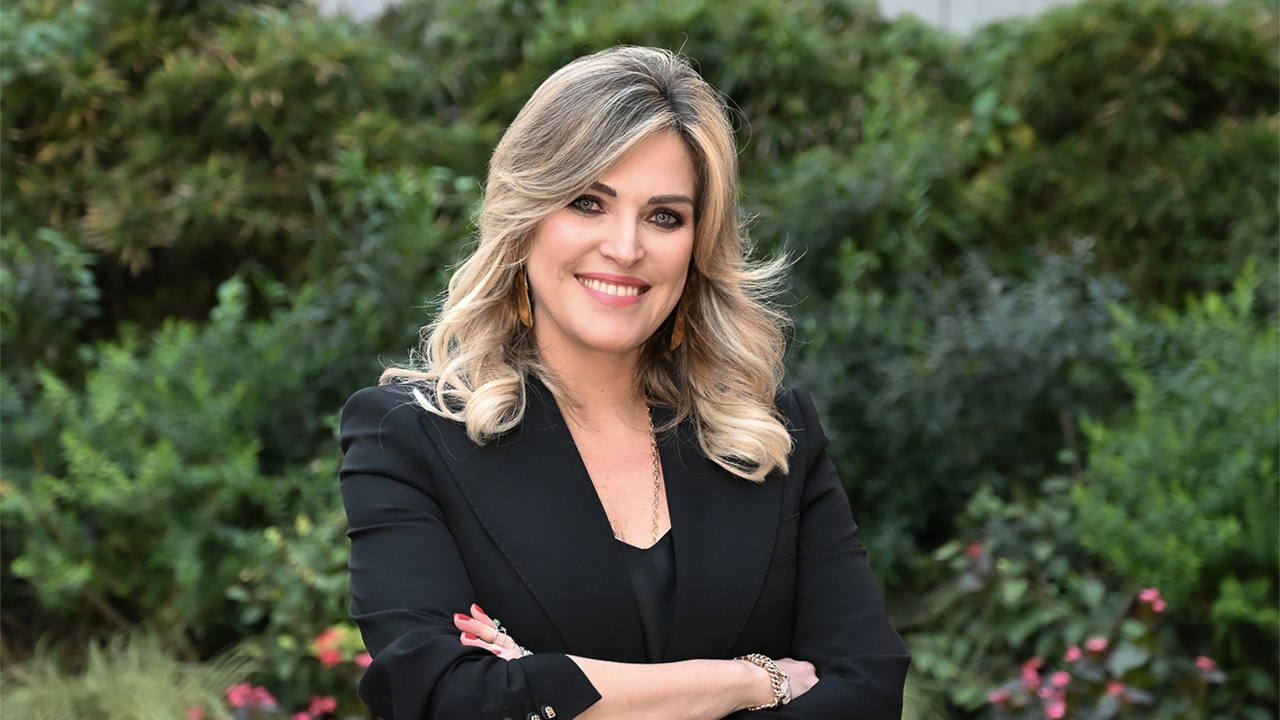
“We’re independent because our company is 100% Italian. Not because we have servers located in Italy. We’re independent because our decision-making and ownership are Italian.” These are the words of Valeria Sandei, Global AI Director at Almaviva Group and CEO of Almawave, in an interview in the Business and Finance section of La Repubblica in which she talks about the Group, saying that it is no longer just a leader in the Italian IT sector, but one of the most active players in Europe’s cutting-edge AI ecosystem.
This vision and strategy are reflected not only in the “Velvet” family of proprietary language models, developed in Almawave’s laboratories in Rome, but also in the company’s R&D activities.
And when it comes to research, 2026 has proven to be an exceptional year. Winning seven contract bids simultaneously for proposals across different programs - Horizon Europe, the European Defense Fund, and national funding initiatives - is a sign of a consistent and coherent strategy.
- One of the most significant projects is CoAgent, which, as part of Horizon Europe, brings together 22 organizations from 9 countries to develop generative AI agents distributed across the cloud-edge continuum, thereby reducing dependence on US hyperscalers.
- GAINAfrica - coordinated by the Sapienza University of Rome - is active on an even broader geographical scale. This European and African consortium operates in five countries across the continent to develop multilingual generative AI models in the fields of healthcare, agriculture, education, and urban planning.
- Meanwhile, the VaMPiRE project aims to revolutionize the early diagnosis of Parkinson’s disease - which affects more than 9.4 million people worldwide - through biomarkers and artificial intelligence models capable of detecting the disease before symptoms appear.
- In the defense sector, the Group is using MIDAS to develop human and AI-driven decision-support systems, adapting its Velvet LLM to military applications.
- The most visionary project is perhaps the least visible: MeMo, funded by the MUR’s Italian Fund for Applied Sciences and developed in a joint laboratory with the University of Rome Tor Vergata. Its objective is to redefine the very architecture of large language models through explicit associative memories, enabling full control over what the model remembers and what it forgets - a crucial requirement for explainability and regulatory compliance. “If this architecture performs as well as we hope, it will radically change the infrastructure requirements for training models, dramatically reducing the enormous costs that are currently holding back development. It would be a truly groundbreaking innovation,” says Sandei.